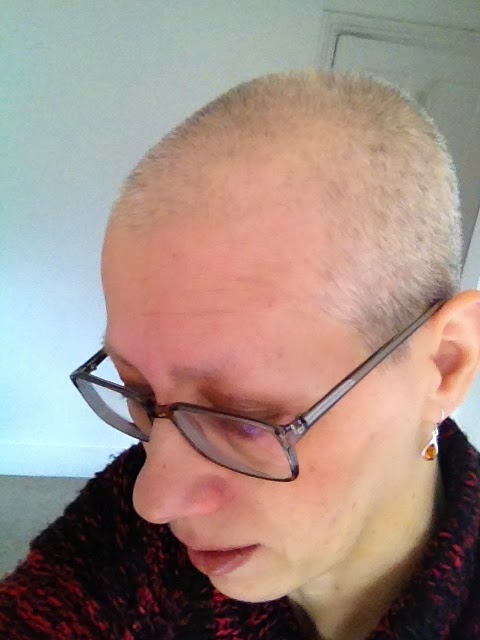
Sunday, 22 February 2015

101. The IKEA friend

More observations from the cancer waiting rooms and wards:

The friend, the husband, the daughter.

They come in all shapes and sizes, the people who come along with the cancer patient. There is usually a certain "match" with the person they are with.  I have been as touched and intrigued by them as I have by my fellow patients.

Here we go, shamelessly stereotyping.

The elderly husband... He is as bewildered as she is, but both the husband and the wife sit quietly through their ordeal, side by side. They rarely speak; they don't need to. He doesn't leave her. He might have brought a newspaper, attempt a crossword, but you sense that his mind is really with his wife. He carefully puts away her walking stick. She looks vulnerable. So does he, but as you are sitting there looking at them both, you ponder that at least they have each other. They've managed to get through a lifetime of ups and downs together and now they find themselves here, in an alien world that is just about bearable because he is there, she is there. What will he do without her?

The just-about-to-retire husband... They have both worked hard all their lives and now they are on the cusp of retirement. But here he is, with his wife, in the breast clinic. He looks worried and she is trying not to. They had plans and breast cancer wasn't one of them. What is going to happen? They read the leaflets, get a take-away coffee. Once the treatments start and they get into a routine, he will do the crossword, focus on it, finish it. Or, more likely, she'll bring a friend.

(Hm. We're not quite ready to retire, but I think my husband fits this category nicely.)

The young husband... Of all husbands, he looks most shell-shocked. He holds her hand when they sit down. No crossword for him. What can you say? 

The busy sons and daughters... They may be busy, have jobs and children of their own that need attention, but they are faithful. Here they are, waiting with their mother, sitting with her as she has her chemotherapy, because she needs them. She couldn't get here on her own, for starters. They have dropped everything. They may be on the phone to a sibling, giving updates. ("Still waiting.") They ask mum if she wants anything, they go off to the hospital shop, they return with a hospital sandwich and a bag of hospital crisps. Unless they come prepared with provisions. Halfway through, their sister comes in. They give a brief handover, and they're off. As I said: they have a job to go to and children to collect from school.

The daughters of the mother who doesn't speak English... These daughters (they are almost invariably daughters) warrant their own category. My South London hospital has a large Asian population in its catchment area, so I've seen enough of these daughters to be able to turn them into a stereotype. The elderly mother shuffles in with her long thin hair in a tight bun, a warm coat over her sari. The daughters come in twos or threes, or in shifts. They chat and chat (the daughters, that is. The mother only speaks when spoken to.) It can even be quite jolly at times. It's always touching, because they may have busy lives, but they don't let it show. Mother is ill: they give her all the time she needs.

The teenager... A rare breed in hospital, the teenage sons and daughters who sit with their. mother in waiting rooms and treatment areas. They are probably there to provide practical help rather than moral supportThey don't speak or look around. For all you know, they could have been waiting at the airport or queueing at a bus stop, plugged into their iPods whilst playing games on their iPads. Love 'em.

I had a couple of these with me - although only one was true to stereotype; the other was reasonably chatty and brought her knitting instead of a gadget.

The supportive friend... Where to start? The friend is less devastated and more practical than the family member. She (it's mostly a she) is equally focused on the patient, but the illness doesn't affect her life quite as much. Unlike the husbands and sons and daughters, she won't need to watch this patient go through the misery of side effects day after night after day after night. So it's easier for her, perhaps, to pull out the stops during this hospital session. If the environment is somewhat alien to her, she doesn't let it show or get her down. She gets on with it, she is helpful, she is kind, she occupies herself or talks quietly: whatever is needed. Marvellous.

I was lucky. I had several of these supportive friends. Thank you kindly.

The I-know-best friend... Thankfully, these are a rare breed too. I've seen a couple and it's enough. I always felt sorry for the patient. There he is, the weak-looking, defenseless patient, marooned in his chair and hooked up to a drip. There she is, the matronly friend, fussing over him, drowning his soft voice with her stern one. Has he eaten well? He must look after his diet you know. And not give up. Acupuncture is rather good, she has heard. Has he tried it? No? Why not? He must.

It's best to have your own supportive friend with you when there is an I-know-best friend about, so you can exchange looks and shake your head imperceptibly. If you're on your own, you just sit there brewing resentment.

The IKEA friend... This is the most puzzling breed of all. The I Know Everything About-this friend. The reason she Knows Everthing About-this is that she has been there herself. I am sure there are many people who have been there themselves and it turns them into a Supportive Friend as described above. The IKEA friend is different. She is determined to let everyone know that she has been there herself. She strides into the waiting room exuding confidence. She owns the place. Hey! says her body language. I am at ease here! I am a member!

What sets the IKEA friend apart is her determination to save not only her own friend (the patient) with her expertise-by-experience, but all the other patients too. Including me. When she talks to her friend, she talks to all of us in the waiting room. It won't be long before she lets us all know that she Knows Everything About-this, because she, too, has had breast cancer. (And she's not afraid to say it out loud. BREAST CANCER.)

The most perfect specimen of this breed was the friend who came along to the radiotherapy waiting room. I was sitting there minding my own business, hot and hat-less after my long walk to the hospital. I can't quite remember apropos of what exactly she started telling us all that she was an IKEA type of person. Apropos of nothing, probably. But there she was, holding forth, her friend (the patient) standing quietly by her side. And suddenly she whipped a photograph out of her handbag and put it under my nose. Look! she said. That was me, a couple of years ago! The photograph showed a group of people congregating around someone's front garden, and one of them was bald. 

You see, this is what puzzles me. What is the IKEA friend trying to say, exactly? Don't you worry about your cancer/baldness/misery, look at me, I have been there, done that, and I've re-assembled myself, and so can you? Which assumes that I am worried about my cancer/baldness/etc, which I am not (well, actually yes, I am, but she is the last person I'd share that with). Or is she somehow missing the feeling of being special that comes with being a cancer patient? Does she feel she has to justify her presence in this place? Or does she genuinely feel that she is being helpful?

Whatever the reason, I am still wondering what the correct response is to a stranger who shoves a photograph of their previous bald self under your nose. Answers on a postcard please. (Or on this blog.)

If there are any IKEA friends reading this, let me tell you: it is not helpful to draw attention to yourself in the cancer waiting rooms and VIP lounges and wards. Because that requires the patients to focus on you, which is the last thing they need. Before you know it, you will turn into an I-Know-Best friend, and then where will we be?

The thought occurs that there is another type of IKEA friend, and I'm afraid I fit the bill. They are not IKEA customers, but IKEA staff members.

The I Knows Everything About-this staff member is also an expert, not through having been a cancer patient, but through having worked in the cancer world. They are doctors and nurses who speak the language. I hope that this only bothers the staff and not the patients. I have spotted them, sometimes, and they usually fall into the Supportive Friend category. You just notice that they know how to work the system and they know what questions to ask. The patient usually seems reassured by her friend's presence. When you get talking to her, she may even nod her head gratefully into the direction of the friend: She's a doctor, you know. 

Here is evidence of my membership of this breed. A friend of mine once texted me to say that she had just been admitted to hospital. Her situation was distressing and I knew that her partner couldn't be there, so I hopped on my bike and went to find her. It was mid-morning. I did the confident stride onto the ward, Look, I Know Everything About-this, I'm a professional. It didn't quite stop the staff nurse from telling me sternly that visiting hours were in the afternoon, but I looked over her shoulder to the ward sister and asserted, Well, yes I know, but don't you agree that a woman needs her friend with her at a time like this? They conceded. Just as well. My friend was in no fit state to advocate for herself. "I'm soooo glad you were there," she said later. "I would just have gone along with the treatments they suggested even though I didn't really want them. I was scared and it would have been so much more awful if I had been on my own."

Which makes me think that there are merits in having an IKEA staff member around. I hope so, anyway.

This week, another friend told me she needs to have a shot or two of chemotherapy treatment.

Not for cancer, curiously, but to help with another long-term condition. 

I was about to offer my company, as this was one of my Supportive Friends who has been to the VIP lounge with me. Wouldn't it be jolly? But as soon as I visualised it, I felt ill and vaguely nauseous. I have managed to sit through all my treatments with reasonable level-headedness, but boy, I don't even want to THINK about going anywhere near another VIP lounge any time soon.

And when I am ready to face that world again, in a couple of years' time perhaps, beware. If I'm not careful, I shall become part of a terrifying species. An IKEA staff member and IKEA customer rolled into one.

I KNOW EVERYTHING ABOUT THIS! I might say to everyone willing to hear it. And I really mean EVERYTHING. You know what? You should read my blog.


Sunday, 15 February 2015

100. One hundred blog posts about living with breast cancer

I suppose we all like a milestone, even if it's an artificial one. Is life at 50-plus-one-day so very different from the life at 50-minus-one-day? Is your outlook on the 1st of January different from the one on 31st December? Just asking.

Is blog post number 100 any different from number 23, 67 or 89?

Yet it's a milestone for me.

Perhaps because it coincides with the first steps on Recovery Road, a road going Down the mountain rather than Up the mountain. Having reached the top at last, it's time to stop and stare perhaps, taking in the new vista.

(Vistaa pleasing view; a mental view of a succession of remembered or anticipated events.)

This one hundredth blog post feels a bit like the flag planted on my mountain top, look here folks, done it, made it, been there. I know I'm not the only one, there's a veritable FOREST of flags where I'm standing, but still, it's my very own hand-crafted, hand-carried, hand-planted flag, and I've got the scars to prove it.

But I'm not going back down the way I came. I'm going to come down on the other side of my mountain, leaving that treacherous Cancer Road out of view.

A big part of me wants to leave this blog behind as well, along with Cancer Road.

Out of view, out of mind. Onwards.

I am glad I wrote it. It has kept me sane, enabling me to step outside myself. When things were particularly bleak, I would be composing the words in my head: Ha! wait until I describe this particular little horror. Knowing, at the very same time, that there would be another blog post later on, one that said OK, that's over now. Next!

Crucially, blogging also kept me connected to the outside world. Friends and acquaintances and even strangers sending me supportive vibes through my iPad, even when I couldn't move beyond bed and sofa. There is a lot to be said for modern technology. I cannot describe in words what it was like to feel that others were thinking of me; to know that they were interested enough in my tales of woe to keep reading.

Even now that I'm done with the treatments and have gone back to work, I meet people I hardly know (distant work colleagues, say) who tell me that they've read everything, right from the start.

This has the bizarre but rather nice effect of feeling like I've got a whole new set of friends out there. Because if you've listened to me banging on about being breastless/hairless/defenseless/helpless, and you've stayed with me even during the grimmest, most tear-filled of days, then you're a friend, right? It's a bit one-sided of course, but interestingly, I have noticed that people who used to be mere acquaintances, or even strangers, seem to open up more. I suppose if I can tell them about being breastless/hairless/etc, then they can tell me about their life as well.
 
So it's been good, all this blogging. But isn't one hundred posts quite enough of a bad thing?

No, apparently not.

Now that having cancer is no longer my full-time job, people are giving me hints.
  • You'll have to find something else to blog about! (As if it was the blogging that was my primary objective, rather than the specifics of coping with my verbal cancer diarrhoea.)
  • Don't stop blogging! I'm going to have withdrawal symptoms!
  • What are you going to DO with your blog? (This in an expectant sort of voice that leaves no room for the "nothing" response.)
  • When is the book coming out?

So, here is my answer. I will carry on blogging, but ONLY about things related to being a recovering breast cancer patient.

Reflections on what it was like, looking back. It's quite amazing how things look quite different when they are behind you. I mean, who knew that going back to work in-between treatments, the stop-and-start approach, was just madness? At the time, getting a sick note for the entire ten months just seemed feeble; now, I think: Get a grip! Of course it doesn't count as skiving if you sign off from the day job for the duration of all these gruelling treatments! Actually, it seems that you all knew this, and told me so at the time, but I didn't believe it.

Snippets of memories that might be interesting or entertaining, but never made the blog. Ah, I can think of a whole stack of them.

I'm also wondering whether I ought to go back to the very first three months following the discovery of my breast lump, before I started blogging. I read back through my diaries recently and was shocked at how utterly floored I was by it all - I have genuinely forgotten all of that. Pouring that all over the internet would have felt far too scary at the time, but now that I have safely emerged at the top of the mountain, I wonder whether it's worth releasing? What do you think?

Reports of the journey down Recovery Road. Because it's not over, of course. I may think it is, I may pretend it is, but it's not. I am feeling genuinely happy and on top of the world (well, perhaps not the whole world, but on top of the mountain, definitely), but physically, I'm still struggling. This week, I worked quite solidly for four days (sooooo excited about being able to finish a task I've tried to do for the past year, but never quite managed, because of the stop-and-start problem), but on day five, when I had planned to do just a little bit more on that task, or perhaps go for a very long walk, I simply collapsed into bed. All day. And I haven't quite emerged from that spell of exhaustion.

The Take-each-day-as-it-comes lesson was one of the hardest to learn and the easiest to forget.

Comments on cancer-related news items. Have you noticed how cancer is in the news all the time these days? Is it just me, or was it always thus? (There was another one on the BBC this morning, a celebrity "coming out" as a breast cancer patient. I'm glad I'm not famous. I would be horrified if my getting-through-each-day was described on the radio as a Cancer Battle, as if an ability to "fight and win" would be my own personal virtue, and dying would, presumably, be a result of my own deficiency as a warrior. Ah, I could go on.)

One thing I am not at all sure about is your suggestions of publishing a book.

Those are flattering suggestions of course, but every author must ask herself: why? who for?

I'd be interested in your answers to those questions. I can think of some myself (didn't I start this blog partly because I thought Owl was such a marvellous addition to our family, he was worth sharing?) But for now, I am shelving the book idea - mostly because my daughters cannot think of anything much worse than a mother blogging about things that mothers should very well keep quiet about, posting pictures of bald heads and private pigs in the process. There's not much point in publishing a book if you're not going to promote it, but I haven't quite resolved the tension between wanting to share my cancer-writing as widely as possible, as part of my Let's-try-and-save-or-at-least-help-the-world affliction, and protecting my children from a future psychiatrist's couch ("My mum wrote about me! Embarrassing things! In a book! Without my permission! I'm doomed!")

Wait a year or two perhaps, when mum being too tired to read Winnie-the-Pooh is a distant memory, her hair is flowing freely, and she hasn't died.

In the meantime, I'll keep blogging. But only when I feel like it. It could be several times a week, or it could be once a month. You'll just have to wait and see, and so will I.

That leaves me with the final task on blog post 100, which is to add a photograph.

"One day, we will look back, Owl and I, and marvel at the road we have travelled."

That's what I wrote on the About Owl page when I started the blog. I guess that day has come. So off I go in search of a photographer, to immortalise us both, Owl and I, looking back.

I find youngest daughter. She agrees on the condition that Bear can be photographed for the blog too, wearing the brand-new waistcoat I made for him this weekend. (See, I'm on the way down that mountain. Sewing waistcoats for bears. Must be feeling better.)

Doesn't he mind being on the blog then? Unlike Pig?

No, he doesn't. One day, asserts the younger daughter, he is going to be famous anyway, so he might as well start getting used to the paparazzi.

I wonder... could I seize this moment? This particular child is most mortified if people talk to mum about the blog or the cancer... but let's see.

"How about a making the blog into a book?"

No. Just NO. For the record: if there is ever going to be a book, the younger daughter is NOT (repeat: NOT) going to contribute to the production of the front cover. We're sticking with mug shots for the blog. Here they are.

Owl and I, looking back on a cancer-filled year
The almost-famous Bear in his new waistcoat

Saturday, 7 February 2015

99. Our chances are 50/50

It was World Cancer Day this week. Did you see the news?

One in every two people will get cancer at some point in their lives.

Cancer Research UK says so. I've always thought it was one in three, but no, it seems that it's half of us.

Can that be true?? The mind boggles.

When I started writing this blog I thought that it might be interesting for others to hear what it's like to have cancer. It's not as if many people get to experience it. Not like blogging about, say, what it's like to be pregnant. Describing that would just be tedious. Self-indulgent. Who on earth wants to hear about my morning sickness?

But it turns out that your chances of, say, giving birth at some point in your life aren't quite as high as your chances of getting cancer.

(Although your risk factors are much more clearly defined, of course. Being male lowers your risk of pregnancy by, oh, about 100%.)

I find the new statistic extraordinary. I know loads and loads of people who have given birth. I don't think I know quite as many people who have had a cancer diagnosis.

(Although it's creeping up, my personal tally of people-I-know. Absolutely everyone, it seems, has an Auntie Ethel who had cancer, but quite a few people have now told me that they've had it themselves. And I had no idea. I might have known them for years, but I never knew about their cancer. Perhaps it's still a hidden thing, with people suffering in silence? Like having a miscarriage? When that happened to me (and I was as open about that devastation as I am about my cancer), I was absolutely flabbergasted to discover how very common the experience was. It seemed to be a similar statistic to one-in-two-people-get-cancer: about half of the mothers at the school gates, I'd say, nodded in sympathy, "Yes, me too." Who knew?) 

It's an age thing, of course, not knowing quite as many people with cancer. Ask me again when I'm 96, and the chances are that people's pregnancies have faded from my memory and I'm wearing myself out visiting cancerous friends in hospital.

I've been thinking about statistics ever since that 90%-chance-of-survival figure I was given. So have others.

"Excellent!" has been the delighted comment from most family and friends. Some wish to take me up on my offer of detailed statistical explanations over coffee. But it isn't all as straightforward as it seems.

"I can do percentages," one friend wrote in an email, "but when I am a patient I can't." She continued:

"It is not the maths that defeats me but the emotional difficulty of imagining anything other than 100% alive, or 100% dead." 

And that, of course, is exactly the problem. There is nothing in-between. It is not possible to be 90% alive, or to have half a cancer. Doctors often make treatment decisions based on statistics and population studies, but you are not a population. You are an individual. Studies on individuals tell you absolutely nothing about risk or chances.

So it's not much use, really, to know that cancer is going to happen to roughly half of the people in your office, on the bus, in the supermarket queue, in your daughter's classroom. You still won't know whether it's going to happen to you. If it does, it will  happen 100%.

Then there is always the I could be knocked down by a bus argument. Even the consultant used it when she tried to put the statistics into context, explaining that you will never really know. "You could live to a hundred and I could be run over by a bus tonight." 

We simply don't know what's around the corner, so there's no point speculating. Until I turn that corner, I'll consider myself 100% cancer-free.

There is one statistic, however, that is now crystal-clear and definite.

My chances of pregnancy were already dwindling with the onset of middle age, but with the cancer treatment frazzling everything in sight (eggs included), those chances have been firmly reduced to 0%.

I'm absolutely delighted that I was among the less-than-half-of-the-population to have given birth, but I consider it to be good news that on this front at least, there is no risk of recurrence.


Wednesday, 4 February 2015

98. The stubbly hair-do

"Is your hair growing back yet?"

People have been asking me this for months, ever since that last chemotherapy session at the end of November.

If only. It takes ages for the poison to work its way out of the system. Three to five months, the VIP nurse reckoned when I asked her how long it would be before I'd have a bit of hair back.

The problem was, how would I know that I could safely stop shaving my head without looking like an autumn tree after a storm, rather bare but for a few hairs here and there? I've had a bit of stubble all through the treatment.

So I've kept a close eye on other regions, for clues. Almost overnight, right on the dot of my final radiotherapy treatment, I found that whilst my two remaining eyebrow hairs had finally given up the ghost, a new fuzziness was appearing underneath.

Not just eyebrows. Areas never seen in public have also started to fuzz over. Areas always seen in public, which I'd hoped the chemotherapy had stripped for good, are beginning to sprout. So I'm afraid I'm going to have to re-join the army of women fighting a battle with beards and moustaches.

Time, therefore, to see what my post-chemo hair is going to look like.

I had my last headshave two weeks ago and am now sporting an unflattering covering of grey stubble.

Let me tell  you, this is not a good look. I've looked it up on the internet and found quite a few women who have posted a blow-by-blow pictorial account of their hair re-growth, so I was vaguely prepared. Apparently, it takes quite a long time for your hair to stop looking thin on top. I've heard that I might expect a different colour, or a different curliness. 

It's rather disappointing that my stubble is as salt-and-pepper grey as ever. Not the lovely silver or pure white I'd hoped for.

Combine this with the thinning-on-top, and my current style is one rarely seen on women but more suited to the mature gentleman. It's worse than being bald, as far as I can see. At least baldness could (just could) be a fashion statement.

Let's hope that soon there will be enough of a covering to be able to pretend that I like it like this. Better still, enough for people to stop thinking I wonder if she's got cancer? and start thinking Lovely hairdo, it suits her. Or better still, passing me by and thinking nothing at all.

Just as well it's winter, and cold, so I can wear hats and more hats, even inside.

Which has the added advantage of keeping my hands off my head. Having a rather enticingly soft stubble is as bad as having a new gap in your mouth which you can't stop searching for with your tongue, just to check it's still there.

Yep. Just checked. Stubble, short on the sides, shorter on top. Still there. Still as short as it was this morning. And this lunch time. And this afternoon. Where's the magic wand when you need it?


The Mature Gentleman look


Saturday, 31 January 2015

97. My chances of survival

I have a 90% chance of being alive in ten years' time.

Is that good? I think it's excellent. But statistics are funny things, aren't they. As my wonderful GP agreed when we had another good long chat this week, you tell one patient that his chances are 70% and they go Oh how fantastic. You tell another patient with the same diagnosis exactly the same, and they break down in distress, Oh how terrible.

So I wasn't surprised when my husband and I sat in the cancer consultant's office for the very last time this week, and she responded to my "What are my chances" question with a "Do you really want to know?"

But she wasn't surprised that this particular patient said Yes I do. She had already turned to her computer screen to show me the systems they use to work out the answer to this kind of question. Clearly, she had pigeonholed me (accurately, I feel) as an intelligent, articulate patient who is able to negotiate the healthcare system. She said so herself.

This was in response to another question, about follow-up appointments.

There aren't any.

There used to be. Breast cancer patients used to be invited to return to the doctor's office every six months to begin with, then once a year. But the cancer team found that this could lead to patients not reporting in with worrying symptoms (new bone pains, say), because they would think, Well, I've seen the doctor two months ago and she said everything is fine, so I'll wait until I see her again in four months' time. Plus, apparently most new problems are not picked up at the routine appointments, but discovered by the patients themselves in-between appointments. Oh, and another thing: patients tend to get rather anxious about the follow-up checks.

So now they've started a new system called Open Access Follow-Up, where they don't call you in, but you contact them with any worrying symptoms.

The problem with this, said the consultant, is that some patients are easily put off if they are not immediately successful in getting an appointment. Others who are perhaps less clued in than I am might simply not turn up with their new aches or pains.

Interestingly, she added that patients tend to use the OAFU (yes, honestly, they use that acronym) in the months following the end of treatment, and then tail off. Perhaps they simply need to get over the shock of not being a full-time patient anymore, or the insecurity that comes with not having doctors and nurses peering at your blood results and prodding your surviving breast on a regular basis.

According to the OAFU leaflet (see, we're all learning to speak the jargon here), the breast care nurse will teach me what kind of symptoms warrant an immediate return visit to the clinic. I haven't heard from her yet, so we'll wait and see... she's been off sick with stress from too much work, so perhaps it's just as well that I already know what to look out for.

New nodules in my scar or neck or other breast, of course. But also signs that the cancer might have spread (for me as a breast cancer patient, that is most likely to be my bones, lungs, liver or brain): any persistent bone pains, shortness of breath, tiredness, weight loss or headaches, and I'll be on that phone. And if they don't give me an immediate appointment, I'll just nip down to the clinic from my office, preferably wearing my Staff Badge, and make a fuss.

What they did offer me are annual mammograms, but I'm trying to argue my way out of that one.

No point, as far as I can see. My particular cancer was not visible on a mammogram, not even on that day when I went along to have my lump checked. The consultant touched my breast with one finger and went Oh yes, there it is, I can feel it and sent me along to the mammogram room followed by the ultrasound room.

"I've looked at your mammogram and it looks absolutely fine!" smiled the ultrasound woman. She soon stopped smiling, because within seconds, there it was on the screen, an unsightly ragged-edged mass that clearly wasn't the cyst we were all expecting.

I had never heard of breast cancers that are invisible on a mammogram, but now I know there's even a word for it. Mammographically occult.

Definition of "Occult": having mystical, supernatural or magical powers, which I prefer to the medical definition: not accompanied by readily discernible signs or symptoms.

That's my cancer: one with magical powers, in possession of an invisibility cloak.

I've added mammographically occult to my vocabulary, which always catches doctors by surprise. Keen as I am to understand everything, I made Ultrasound Woman explain to me how it is possible to have an Occult Breast Cancer, and I now see how it happens (bit too convoluted to explain here, but it's to do with having very dense breast tissue. Too much information, perhaps?)

Consultants have been mumbling promises of an annual MRI scan instead.

Ah, the MRI scan. I've seen the pictures taken shortly after my diagnosis, when they wanted to check whether the cancer was limited to the lump or whether it had gone all dotty in the rest of the breast. No hiding under a magic invisibility cloak here: my lump lit up on the screen like a beacon.

Alas, although my consultant was happy to endorse my argument, it wasn't up to her to decide whether I qualify for such five star follow-up: it's the surgeons and the radiographers, apparently, who discuss this in their team meetings, and they are not always keen on it. (Why not? Too expensive? Not enough evidence that it's necessary? I didn't ask.)

So I've fixed an appointment with the surgeon in two months' time. (Not my own lovely surgeon, unfortunately, who has now left.) If she says No, I definitely will ask why not, and I will only be satisfied with fully argued and convincing medical explanations.

Apart from the annual mammogram or MRI scan, I have started a 10 year course of hormone treatment.

My cancer was spurred into growth by oestrogen, so I'm taking pills to stop that happening. Five years' worth of a drug called Letrozole, probably followed by five years' worth of Tamoxifen (although the consultant pointed out that the treatment plan may well have changed by then, what with new research coming out all the time).

I also need to take a daily bone strengthening tablet, to combat Letrozole's side effects. Despite my gloriously young bones. Better safe than sorry, I suppose.

My GP wrote "until 2020" on my repeat prescription. Blimey.

So, back to the statistics. "What are my chances of the cancer coming back?" I wanted to know.

And yes, I did want to know. I stressed the point by saying that I understand about statistics and their limitations. So many ifs and buts. In the end, they are just numbers - and, as my surgeon once helpfully pointed out: "It could just be your number."

The consultant spent some time explaining how the online "what's her chances" system works, what research it's based on, what the caveats are. The doctors use it to work out, for example, whether a course of chemotherapy is worth the bother. I won't bore you with it all, but if you're interested, I'm happy to talk it through over coffee, as I do find it all utterly fascinating.

So, here are the numbers. These are percentages of women still alive 10 years after the diagnosis. They don't look at recurrence rates (in how many women does the cancer come back?) for reasons that I'll also explain to you, if you like, over that coffee.

Looking at a lot of studies combined, of all women with my type of cancer (sized just under 2cm, spread to three lymph nodes) who had been treated with surgery but nothing else, roughly 80% were still alive 10 years later. About 17% had died of cancer, and 2% had died of something else. (Leaving, it seems to me, a mysterious 1% who are not alive, but they haven't died either. Told you. Tricky things, statistics.)

But of the women who had been treated with surgery and chemotherapy, 90% were still alive after 10 years.

So that'll be me.

My husband was surprised that the chemotherapy had added so little.

"All that effort! You'd think that it would have doubled your chances, at least."

That's another bit of evidence that everyone interprets statistics differently. (Which is why some people keep buying lottery tickets, but I would never bother. Unless it's a school raffle, where I once won first prize, an iPad mini, with a 50p ticket. What are the chances of that? Much, much lower than my chances of getting another bout of cancer in the next few years.)

From where I am sitting, it seems that the chemotherapy has doubled my chances. Instead of on in five women succumbing, it's now one in ten.

Which is not much worse than your chances, I may add. Because one in every eight women will get breast cancer at some point. (Perhaps my chances are even better than yours, because of the Letrozole and the annual scans?).

One in three people will get cancer. One in four people will die of it.

I know these statistics. I reel them off, sometimes, when giving talks. Cancer affects all of us. So being told that I have a one in ten chance of dying in the next decade doesn't worry me too much. As far as I can see, I've always had a one in ten chance of dying. (And the chance goes up, I suppose, as we get older. What were the chances of my elderly mother surviving for another ten years? There, see what I mean? The statistics probably include women in their 80s, but I think my chances are better than theirs.)

So unlike Ms C, who had a similar cancer to mine but didn't want to go back to her normal life because she was so terrified that the cancer would be back, I don't feel terrified at all. Yes, I know that it can come back. But if it does, then it's just bad luck, isn't it. I've done everything I can to prevent it happening. The surgery, the chemotherapy, the radiotherapy, the hormones. Now it's just a case of living life again, knowing that things can, and do, go wrong sometimes.

I suppose the difference with my pre-cancer life is that now, I really know that things can go wrong.


I knew it before, but only in my head. Now, I know it in my body and in my soul.

It's a useful thing to know, of course, but you can't let it ruin your life. Life is, after all, a terminal condition for all of us - but none the less enjoyable for it.

Sunday, 25 January 2015

96. Wine on a Sunday afternoon

All the cancer leaflets tell me that after treatment, I am likely to remain tired for a long time (we're talking months and months); feel depressed; and generally not be able to pick up my life where I left off.

That may be so, but for the moment, I am feeling rather optimistic. Yes, I am still tired, but I hope that I can just accommodate that in my life, which I actually intend to pick up more or less exactly where I left off.

Not just that: I am also hoping to catch up with some things I have not been able to do in the past year. See friends and family, go on holiday, that kind of thing. It's rather wonderful to be able to book some time away without any caveats. None of that Well, just try, and if I can't do it, I'll cancel it.

No more need for the Cancer Card.

I don't expect to be done and dusted with the misery, but then who ever is? That's part of life, isn't it. That will just be an ordinary share of misery, rather than the one-thing-after-another misery of the past year.

To celebrate that, those of us who weren't too busy with homework (husband, younger daughter, myself) went out for a lovely lunch. And yes, we all agreed that it was worth celebrating.


Perhaps miserable wasn't the word everyone would choose, but the past year, younger daughter thought, had certainly been annoying.

Why?

"Because sometimes I wanted you to read a book to me, and you couldn't because you were too tired."

I couldn't agree more: 2014 was extremely annoying indeed. See: large font and everything. Bold. Italics.

Tonight, I have decided, is a good time to read Bear and daughter a bit of Winnie the Pooh. You're never too old for Winnie the Pooh. The very good news is that I can understand Winnie the Pooh again.

That, you have to agree, is progress.


Friday, 23 January 2015

95. Champagne on a Friday afternoon


Let us raise a glass, Owl and I. Cheers. That is the last radiotherapy session over and done with.

The final installment of nine months worth of cancer treatments, starting with a lumpectomy on the 1st of May last year, followed by a mastectomy, four months of chemotherapy and now these past weeks of radiotherapy. There are, of course, still many years of hormone treatment ahead of me. Years of follow-up appointments, scans and who-knows-what-else. (In fact my next hospital appointment, to take my blood and discuss all this with the doctor, is on Monday.)

But that doesn't really count, that is merely the New Normal, the Normal where I have become - and will forever remain - a cancer patient in the NHS.

I felt remarkably well last weekend.

Two weeks of treatment in the bag, and there I was in the swimming pool on a Saturday morning... ("They told me I'm not allowed to swim," said my Choir Friend who is also having radiotherapy at the moment. Yes, they told me that too. I've considered the advice and decided to ignore it on the basis that the I-feel-much-better effect of a swim outweighed the risk of chlorine-induced skin irritation. Anyway, I can't feel the skin around the radiotherapy site.) ...so there I was, and before I knew it, it was half an hour and 50 lengths later. Only a week earlier, I had floated sedately along in an effort to keep my limbs vaguely flexible. Now, I was positively cleaving through the water. For the first time in living memory, I felt strong. (I'm not exaggerating. I had genuinely forgotten how that felt.)

The next day, I stood in front of the microphone in church and sang lustily without becoming dizzy or sweaty of even vaguely out of breath.

I came home on top of the world.

"I feel BETTER!" I beamed, several times, to make absolutely sure that my husband and children got the message. Because I did feel better. Properly better. All the more sweet for being so unexpected, because I was still in the middle of my radiotherapy treatment.

"What shall we do to celebrate the end of nine months of misery?" I asked them.

To which one of my children remarked, "Now mum, don't exaggerate. It wasn't really nine months of misery."

I suppose I should see this as good news. The fact that my children don't seem to be too traumatised by the whole affair. I suppose they haven't seen the tears on my pillow, and I'm glad they didn't.

It even made me stop and think. Am I exaggerating? Perhaps it hadn't been too  bad, after all? Because look at me, here I am, still smiling (no, beaming, as noted above), with not much to show for my efforts except a bald head. And even that won't last.

But still, I was entitled to a bit of a celebration, I thought. So I booked a very English afternoon tea (with champagne) at a posh hotel near the Royal Marsden Hospital, to be enjoyed immediately after my final zap. I found a good friend who could take time out of work to celebrate with me.

It's been a funny sort of week, an up-and-down one, but with the up and the down happening at the very same time. Two sides of the same coin.

On Monday, I marched cheerfully along to the hospital, chatted cheerfully to my fellow patients, cheerio'd the radiotherapists cheerfully, walked cheerfully back home, then fell into bed and cried and cried. Perhaps "wailed" is a better description.

My happiness, borne of that wonderful feeling of getting better, only exists because of all the misery. (Yes, misery. I'm going to insist on it. It was bloody miserable.) It means that I can't be this happy without acknowledging the misery at the same time. I can't smile without tears.

And it isn't all over. Having fancied myself fully recovered last weekend, I then had to acknowledge that actually, these daily round trips were getting a bit too exhausting, my daily recovery time a bit longer, so I had to give up on work. Trying hard not to feel too guilty about it, not too much of a wimp. I'm sleeping well beyond the morning alarm clock.

So, today's final zap then.

For some reason, it was a couple of hours later than the usual 11.30am slot, so Mr A and Mr B and Ms C and Ms D weren't there, but there were several other patients I vaguely recognised. I joined in cheerfully with the standard how-far-do-you-have-to-come and how-many-more talk.

"My last one today!" I said, cheerfully.

Cheerfulness all round. In the waiting room, in the zapping room, walking out of the waiting room: I couldn't stop smiling. Then I went to the toilet, and just like that, the coin was flipped and I cried.


Afternoon tea to celebrate the end of cancer treatment
I'm glad I booked that afternoon tea-and-champagne. It was wonderful to sit and talk with a friend who doesn't mind the odd bit of tearfulness, and can laugh heartily when needed.

A couple of hours later, I crossed Albert Bridge for the last time. Well, not the last time I'm sure, but next time I'll leave Owl at home. I'm quite done with it all.


Leaving the Royal Marsden behind for the last time
So, once again: let us raise our glass of champagne on a Friday afternoon. Cheers everyone!


Wednesday, 21 January 2015

94. More tales from the waiting room

You'd have thought that Mr A, who is staying with friends during his radiotherapy regime, is the winner when it comes to Long Journeys. Mrs A, who has come down to London to keep him company, tells me that they live in Scotland. There are no zapping facilities in the far north, and going to Glasgow would have been just as troublesome.

But now Mr A has been trumped by Ms C, who has come all the way from the Middle East.

Blimey.

She has been staying in a hotel since the summer, all through her chemotherapy regime and now through radiotherapy as well. They don't have the facilities where she lives either, so her government pays for people like her to have cancer treatment thousands of miles away, in America or Britain.

We end up chatting after our respective zaps. She invites me for a cup of carrot soup in the hospital cafe. This is because we have discovered that we are both researchers unable to produce the stream of academic papers that, on the face of it, we now have the time to write, what with all this sitting about.

It's a discussion I started in the radiotherapy waiting room with Ms D, who has just started her 3-week regime. She was dreading it, because when she had radiotherapy 20 years ago she got so tired, she almost had to crawl in every day.

How about work? I ask her.

Well, yes, that was a stupid thing to do, she now thinks. She worked all the way through that earlier treatment, and not just any old work, but teaching children. It's not as if you can let your head clonk onto a desk halfway through, as I have often done during my cancer-treatment-working-days. She used to go in and teach, then catch the train to the radiotherapy department, then go back to work and teach some more.

This time, she has wisened up. "How long do you need?" her GP asked her, back in September. Until January, she thought, but he'd have none of it. "He said to me, 'you won't be going back in January' and he wrote me off sick until March. So I can recover properly. I don't want to have to go back to work at the first sign of feeling better. I want to have a couple of weeks when I feel really well, before going back."

I nod approvingly, secretly thinking that I am absolutely determined to go back to work properly next week. But then I don't have a class of children to teach all day, and I only work part-time. Plus, I've had all that glorious time to do a bit of recovering during December. But who knows what's sensible? The pressure to work, we agree, comes mostly from ourselves.

I notice Ms C listen to this discussion. (That is how chats in the tiny waiting room go. You talk to the people who you have begun to recognise. The new faces (they might not be new to the waiting room, but they are new to you) pause their reading, and perhaps join in, or just nod and smile, and lo and behold, you've got another waiting room buddy.)

Does she work?

"Yes," says Ms C with feeling. "But I can't. I just can't do it. I'm a researcher, I have papers to write, but I can't concentrate. My mind goes this way and that way. There are all these appointments and all these things going on in your mind. I cannot do any work until all this is over."

They are brief, these discussions, because before you know it, one of you is called in for your zap. So when we both emerge more or less at the same time (there is more than one machine), she invites me to join her for the soup that is part of her daily routine.

We listen to each other's stories. Our diagnoses and treatments are more or less the same, but that is where the similarities end.

I marvel, once again, at how differently patients cope with what seems to be the same situation.

Ms C remains so deeply shaken by her cancer that she doesn't even want to go back home when the treatment ends in a few weeks' time. She is terrified that the cancer hasn't all gone. Shouldn't something else be done? Something more? Shouldn't there be answers, some certainty, more tests perhaps to show that she is cancer free?

It makes me wonder at the huge amount of worrying that goes on in this world-famous cancer hospital, the accumulated fear, the loss, the distress.

You can only guess at it, looking around the waiting rooms. You see patients and relatives, some looking weak, some looking stressed, but mostly, looking fine. The seasoned ones (that's me included) chat merrily over their hot chocolate.

One young woman, sporting cycling gear and some newly sprouted hair, shook her head when a fellow patient, clearly new, expressed distress and confusion at all this waiting in different rooms.

"I've become institutionalised," she said wrily. "I just do as I'm told and don't even notice it anymore."

It was Doctor's Clinic Day, when many patients, including myself, had to see the doctor in addition to having their zap. Confusion all round about having to go and get your notes from the radiotherapists, then wait in the main reception room (the one with the fish tank), or perhaps not, perhaps they want to do your treatment first, just ask them.

I probably still have a bit of professional confidence left, which comes with a feeling of entitlement, so I marched straight through the "Authorised Access Only" doors to the radiotherapists' command room and demanded my notes, which were duly found and given. But later I discovered other patients who had been waiting and waiting in our little waiting room outside those doors, wrongly assuming that someone would know they were waiting for their notes, and only discovering their mistake when a more assertive patient accosted a passing radiotherapist with a meek "my notes please".

Ah, I could write a book. All I'd have to do is spend a day or two observing proceedings at this hospital, then have a cup of tea with one fellow patient, hot chocolate with another, carrot soup with a third, and ask for their stories. No two stories are the same.

This evening, as I sat in our homely kitchen peeling potatoes and chopping carrots and cracking eggs for the family meal, I counted my blessings yet again. I don't even want to imagine what it must be like for Ms C, spending months and months going through chemotherapy and such like, thousands of miles from her home, and not even having a kitchen to crack an egg in.

Oh, and before you ask, yes, I'm still walking. But I've given up on work this last week of my treatment.

I do need a bit of a lie-down after I get home, and by the time I'm up again, there just isn't enough time and energy left to get my head round the academic paper I ought to be writing. Like Ms C, my mind still goes this way and that way.

Next week, I promise myself.